
When I first discovered Minecraft I was hooked by its endless possibilities. Building worlds block by block and exploring vast landscapes gave me a sense of freedom I hadn’t found in other games. It’s no wonder so many people are searching for similar experiences that let their creativity run wild.
Over the years I’ve come across plenty of games that capture that same magic in their own unique ways. Some focus on survival and crafting while others put a fresh spin on sandbox adventures. If you’re like me and crave new worlds to shape and explore you’ll want to check out these games that offer that familiar Minecraft charm—with a twist.
What Makes Minecraft Unique?
What-Makes-Minecraft-Unique
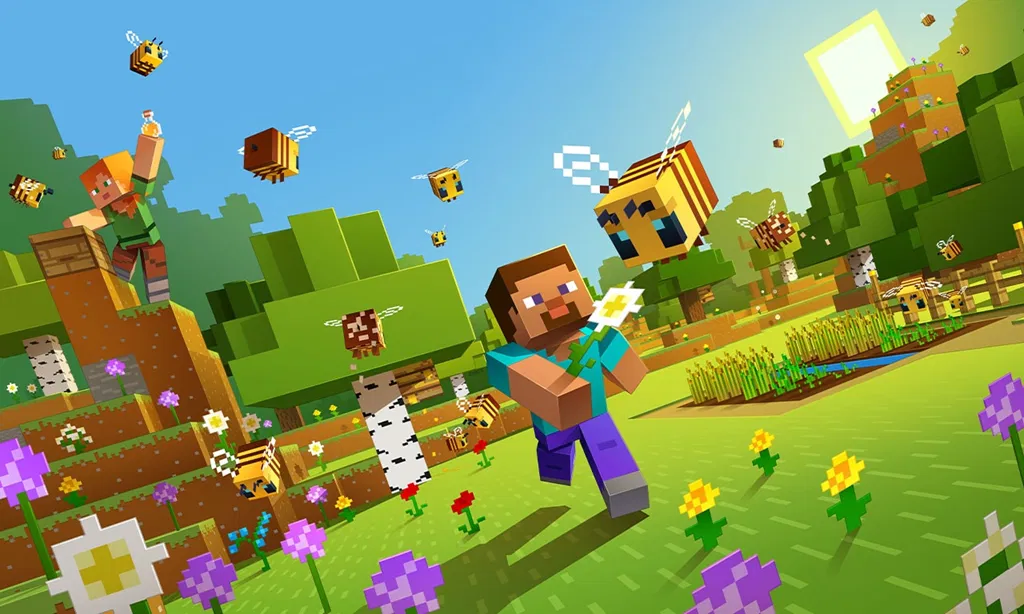
Minecraft sets itself apart through core design choices that blend creativity, adaptability, and accessibility. These distinct qualities enable millions to engage deeply with the game’s world.
Open-Ended Creativity
I experience unrestricted building and designing through Minecraft’s sandbox gameplay. Players use blocks to construct structures, landscapes, machines, or art projects, as seen with replicas of architectural landmarks like the Eiffel Tower and functional calculators created in-game.
Procedural Worlds
Each new Minecraft world generates algorithmically, so every seed spawns unique terrain, biomes, and resources. I encounter extreme variety—from snowy tundras to vast jungles—across sessions, which invites continuous exploration.
Modding and Customization
The robust modding community gives me access to thousands of user-generated add-ons, such as new creatures, gameplay mechanics, and graphical enhancements. Customization options extend to character skins and texture packs.
Survival and Adventure Blending
I navigate survival features—like health, hunger, and resource management—alongside exploratory adventure elements. Game modes include Survival, Creative, Adventure, and Hardcore, each offering a distinct playstyle.
Cross-Platform Access
Minecraft supports cross-play among PC, console, and mobile platforms. My multiplayer experiences remain seamless whether I join servers or realms, increasing social engagement.
Table: Minecraft Standout Features vs. Similar Games
| Feature | Minecraft | Terraria | Roblox | Dragon Quest Builders |
|---|---|---|---|---|
| Procedural World Generation | Yes | Yes | No | No |
| Block-Based Building | Yes | No | Yes | Yes |
| Mod Support | Extensive | Moderate | High | Limited |
| Survival Mechanics | Comprehensive | Limited | Optional | Core |
| Cross-Platform Multiplayer | Wide (PC, Console, Mobile) | Partial | Full | No |
| Community Content Sharing | High | Moderate | Extensive | Minimal |
Distinct vectors like “sandbox creativity,” “procedural generation,” and “cross-platform multiplayer” consistently define Minecraft, supporting its singular position among building and adventure games.
Top Games Like Minecraft
Top-Games-Like-Minecraft
Players looking for games like Minecraft can find rich experiences that combine exploration, building, and creativity. Each title below delivers unique gameplay twists but shares core sandbox elements with Minecraft.
Terraria
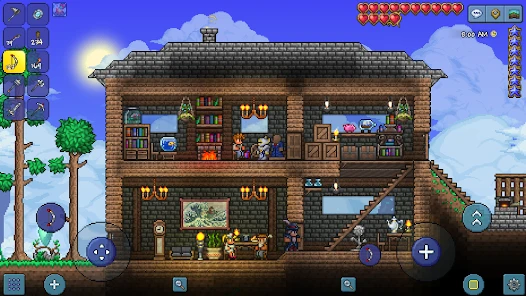
Terraria offers a 2D sandbox experience with pixel-art visuals, random world generation, and deep crafting mechanics. Boss battles, scalable difficulty, and hundreds of items, weapons, and blocks create diverse playstyles. Multiplayer modes support co-op worldbuilding and PvP encounters.
| Feature | Terraria | Minecraft |
|---|---|---|
| World Perspective | 2D side-scroller | 3D first/third person |
| Procedural Generation | Yes | Yes |
| Crafting System | Extensive recipes | Block-focused |
| Modding Community | Active | Extensive |
Roblox
Roblox functions as a user-generated platform where I can play, create, and share sandbox games built with programmable scripting tools. Games range from survival simulators to building worlds, with a massive multiplayer community hosting virtual events and social interaction.
| Aspect | Roblox | Minecraft |
|---|---|---|
| Game Library | Millions of user-made | Single core game |
| Creation Tools | Lua scripting | Redstone, mods |
| Monetization | In-game economy | Marketplace, mods |
Trove
Trove uses voxel graphics and cube-based worlds, integrating MMO elements. I can explore varied biomes, customize my avatar, and participate in social hubs filled with daily quests, adventure, and collaborative building challenges.
Cube World
Cube World focuses on action-adventure with RPG progression, set in a procedurally generated voxel universe. I pick classes, upgrade skills, and explore landscapes filled with dungeons, resources, and loot. Solo and co-op exploration foster creative discovery.
Eco
Eco simulates a shared world where community building and ecosystem management are primary. I contribute to shaping civilization, balancing survival, construction, and the environment. Every action impacts the world’s sustainability, with group decisions and law-making affecting gameplay direction.
| Comparison Point | Eco | Minecraft |
|---|---|---|
| Environmental Impact | Direct, game-wide | Limited, per player |
| Goal | Environmental survival | Open-ended creativity |
| Multiplayer Focus | Collaborative servers | Varied, including solo |
These games continue to evolve through frequent updates, seasonal events, and thriving communities, making them standout alternatives for fans of Minecraft’s creative sandbox gameplay.
How These Games Compare to Minecraft
Comparison helps me understand if a game matches Minecraft’s creative sandbox appeal. I focus on core aspects like gameplay, visuals, and community-driven content.
Gameplay and Mechanics
Gameplay and mechanics in games like Terraria, Trove, and Cube World build on sandbox elements Minecraft popularized. Terraria emphasizes 2D exploration, deep progression, and boss battles. Trove incorporates MMO structure with loot-driven quests, classes, and fast-paced adventure. Cube World combines RPG stat growth, procedural landmasses, and real-time action combat. Eco pushes community-based environmental management. Each title lets me experiment and create, yet none match Minecraft’s sheer flexibility or global scale of procedural worlds.
| Game | Core Mechanics | World Type | Unique Feature |
|---|---|---|---|
| Minecraft | Sandbox, crafting, survival, redstone | 3D, procedural | Mod support, cross-platform |
| Terraria | Sandbox, crafting, survival, combat | 2D, procedural | Bosses, deep progression |
| Trove | Sandbox, MMO, classes, loot | 3D, procedural | Class-based, MMO systems |
| Cube World | Action RPG, exploration, crafting | 3D, procedural | RPG stats, skill trees |
| Eco | Sandbox, survival, environmental sim | 3D, persistent | Eco-system, collaboration |
Graphics and Art Style
Graphics and art styles shape each game’s atmosphere. Minecraft delivers iconic blocky sprites, low-res textures, and bright palettes. Terraria uses colorful pixel art, side-scrolling visuals, and detailed 2D sprites. Trove opts for vibrant voxel aesthetics, closer to Minecraft but adds more particle effects. Cube World’s rounded voxel visuals create a unique, soft look. Eco leans toward realism within its ecological simulation. These variances influence immersion and user interface but retain focus on clarity and creativity.
| Game | Art Style | Perspective |
|---|---|---|
| Minecraft | Blocky, pixelated 3D | First/Third |
| Terraria | Pixel-art 2D | Side-scrolling |
| Trove | Voxel 3D, vibrant | Third-person |
| Cube World | Rounded voxel, pastel | Third-person |
| Eco | Semi-realistic, voxel | First-person |
Community and Mod Support
Community and mod support define each game’s ecosystem. Minecraft’s modding scene stands out, driving game-changing user content, from adventure maps to functional mods. Terraria supports mods like tModLoader, enabling custom items and content. Trove and Cube World offer smaller mod scenes, often limited to cosmetic changes or tools. Roblox, though not listed in tables above, revolves around user-generated games within a vast ecosystem. Eco centers on collaboration, with player governance and server-based mods ensuring new experiences. These communities extend each game’s replay value and foster creativity.
| Game | Mod Support | Community Platform |
|---|---|---|
| Minecraft | Extensive (Java, Bedrock) | Realms, servers |
| Terraria | tModLoader, map sharing | Steam Workshop, forums |
| Trove | Visual mods, Steam Workshop | Official forums, Discord |
| Cube World | Limited, config tweaks | Reddit, fan forums |
| Eco | Server-based mods | Official forums, Discord |
Choosing the Best Minecraft Alternative for You
Choosing-the-Best-Minecraft-Alternative-for-You
Game features shape the best Minecraft alternatives for specific preferences. I assess each title based on creative freedom, multiplayer options, graphical style, modding potential, and platform support. Players benefit if they prioritize a certain playstyle, since some games align better with creative building, resource management, or social gameplay.
Key Comparison Table
| Game | Main Focus | Graphics | Multiplayer | Mod Support | Unique Element | Platforms |
|---|---|---|---|---|---|---|
| Minecraft | Sandbox/Creative | Voxel 3D | Yes | Extensive | Procedural worlds, mods | PC, Console, Mobile |
| Terraria | Action/Adventure | 2D Pixel | Yes | Moderate | Boss fights, layered crafting | PC, Console, Mobile |
| Trove | MMO/Sandbox | Voxel 3D | Yes | Limited | MMO structure, classes | PC, Console |
| Roblox | Game Creation | User-varied | Yes | Core-based | Player-made games, scripting | PC, Console, Mobile |
| Cube World | RPG/Adventure | Voxel 3D | Yes | No | Leveling, exploration | PC |
| Eco | Simulation/Co-op | Voxel 3D | Yes | Some | Eco-system balance, cooperation | PC |
Personalizing Your Choice
- Creative players prefer Minecraft, Trove, or Roblox for unlimited building.
- Social gamers focus on Roblox or Trove, since community interactions and MMO structure dominate gameplay.
- Adventure seekers choose Terraria or Cube World for RPG depth and exploration.
- Strategy-minded players try Eco, since environmental management and collaboration offer unique sandbox challenges.
Customization options and platform accessibility define user experience. If cross-platform play is essential, I rank Minecraft and Roblox highest for seamless access. Modding expands gameplay; Minecraft offers unparalleled mod diversity, while Roblox’s scripting engine supports unique player experiences. Visual style dictates immersion, so choosing between voxel (Minecraft, Trove), pixel (Terraria), or user-generated (Roblox) graphics matters.
Budget and update frequency impact satisfaction. Terraria and Cube World often carry a single cost, while Trove and Roblox operate on a free-to-play model with microtransactions. Frequent updates from Minecraft, Terraria, and Roblox help these games stay vibrant and relevant.
My final choice aligns with playstyle, community interest, and preferred creative depth, ensuring a satisfying experience like Minecraft.
Conclusion
Exploring games like Minecraft has opened my eyes to just how diverse and creative the sandbox genre can be. Whether I’m building worlds block by block or diving into new adventures with friends each game offers its own twist on freedom and discovery.
No matter which title I choose there’s always something new to create or explore. Finding the right fit is all about knowing what kind of experience I want—so I never hesitate to try something different and see where my imagination takes me.
Frequently Asked Questions
What makes Minecraft unique compared to other sandbox games?
Minecraft stands out for its limitless creativity, procedural world generation, cross-platform multiplayer, and a massive modding community that continuously enhances gameplay. Its blending of survival, adventure, and creative modes offers something for every type of player.
Are there games similar to Minecraft?
Yes, there are several games like Minecraft, including Terraria, Roblox, Trove, Cube World, and Eco. Each offers sandbox-style gameplay and creativity but with different mechanics, art styles, and features.
How does Terraria differ from Minecraft?
Terraria is a 2D sandbox game focused on adventure and extensive crafting. While it shares creative freedom with Minecraft, its side-scrolling perspective, combat emphasis, and boss battles create a different gameplay experience.
Is Roblox a good alternative to Minecraft for creative players?
Absolutely. Roblox is a user-generated platform where players can create, share, and play games. Its wide variety of user-made experiences and strong social features make it ideal for creative and social gamers.
Which Minecraft-like game is best for multiplayer experiences?
Roblox and Trove excel in multiplayer experiences, offering robust online communities, social features, and cooperative gameplay. Minecraft itself is also renowned for its seamless cross-platform multiplayer.
Do these Minecraft alternatives support mods?
Minecraft has the largest and most active modding community. Terraria and Roblox support user-generated content, but with different restrictions. Trove, Cube World, and Eco have limited or no official mod support.
What should I consider when choosing a Minecraft alternative?
Consider your preferences for creative freedom, multiplayer options, art style, modding support, platform compatibility, and update frequency. Budget and community activity are also important factors for a satisfying experience.
Is Minecraft still better than its alternatives?
Minecraft remains unmatched in flexibility, global reach, and mod support. However, alternatives like Terraria, Roblox, and Eco offer unique twists, so your choice depends on your preferred playstyle and interests.
Are there free games like Minecraft?
Roblox and Trove are free-to-play, offering sandbox creativity and multiplayer features at no cost. They include optional microtransactions for additional content or customization.
Can I play these games on different devices?
Many Minecraft alternatives are available on multiple platforms. Minecraft, Roblox, and Trove support PC, consoles, and mobile devices, while others like Terraria and Eco are mostly available on PC but have varying cross-platform support.